
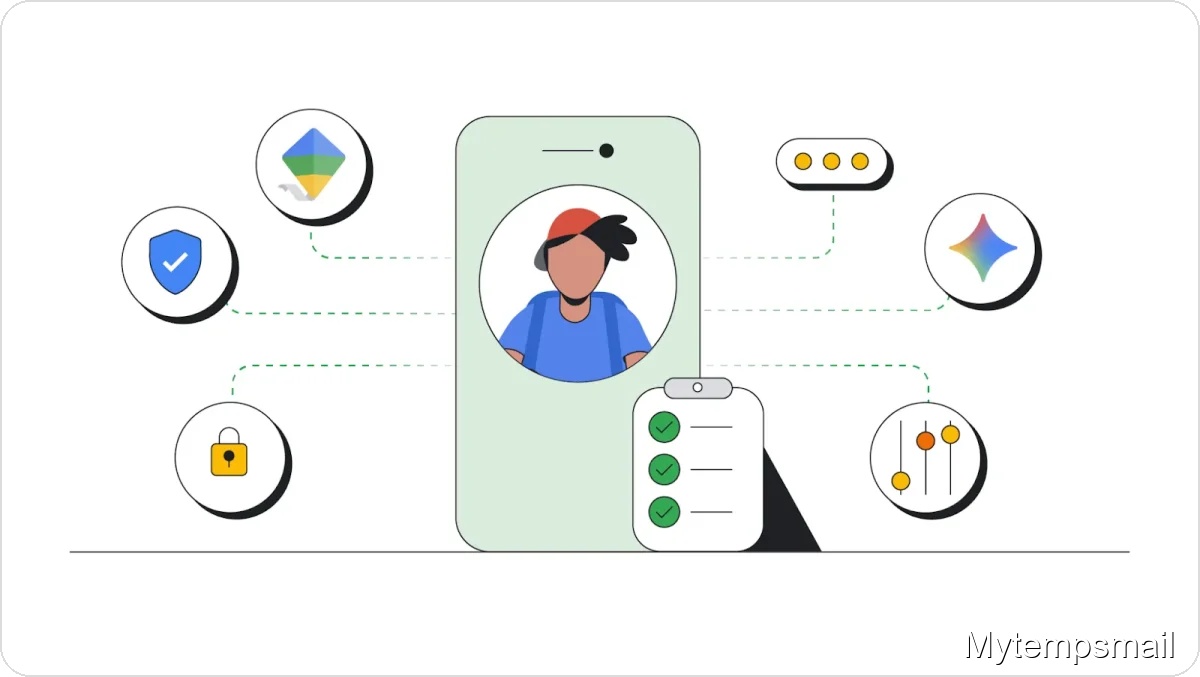

Google frames AI as a tool for safer, smarter learning
In honor of Safer Internet Day, Google Portugal published a set of strategic guidelines for safe online learning, authored by Mindy Brooks, the company’s Vice President of Product Management. Brooks notes that in 2026 the main motivation for young people to use artificial intelligence is education, and she calls for students, parents, and educators to work together to navigate this new frontier with safety and balance.
1. Smart management of online and offline limits
Brooks says knowing when to disconnect is as important as engaging online. Tools such as Family Link let families manage screen time and filter content with personalized controls. In 2026, the School Schedule feature plays a central role by limiting distractions on devices during dedicated study and homework periods.
2. Strengthening critical thinking with Gemini
Google argues that AI should help users understand the why, not just the what. Guided learning in Gemini encourages students to solve problems step by step. Brooks notes that most teachers believe AI can boost academic performance, provided it emphasizes critical thinking development rather than shortcuts to easy answers.
3. Evaluating content and SynthID watermarks
With the rise of AI-generated material, digital literacy is essential. Google recommends using the SIFT method—Stop, Investigate the source, Find better coverage, and Trace the context—to evaluate information. Google’s SynthID technology also applies watermarks to clearly identify images, audio, and video produced by Google’s AI tools.
4. Engagement and supervision on YouTube
Teen autonomy should be balanced with parental oversight. Supervised accounts on YouTube let parents monitor channel activity, including comments and subscriptions, respecting privacy while ensuring content is appropriate. Google has also introduced new quality principles to make it easier to find enriching videos for this age group.
5. Promoting digital citizenship in Portugal
The final guideline focuses on online social responsibility and tackling cyberbullying. Through the Be Internet Awesome program, Google equips young people to be smart and kind online. Brooks also highlights the launch in Portugal of the Meet LEO program. In partnership with MiudosSegurosNa.Net, the initiative plans to train 9,000 Portuguese parents and educators in digital safety over the year.
Read Mindy Brooks’ full article on Google’s official blog.
