
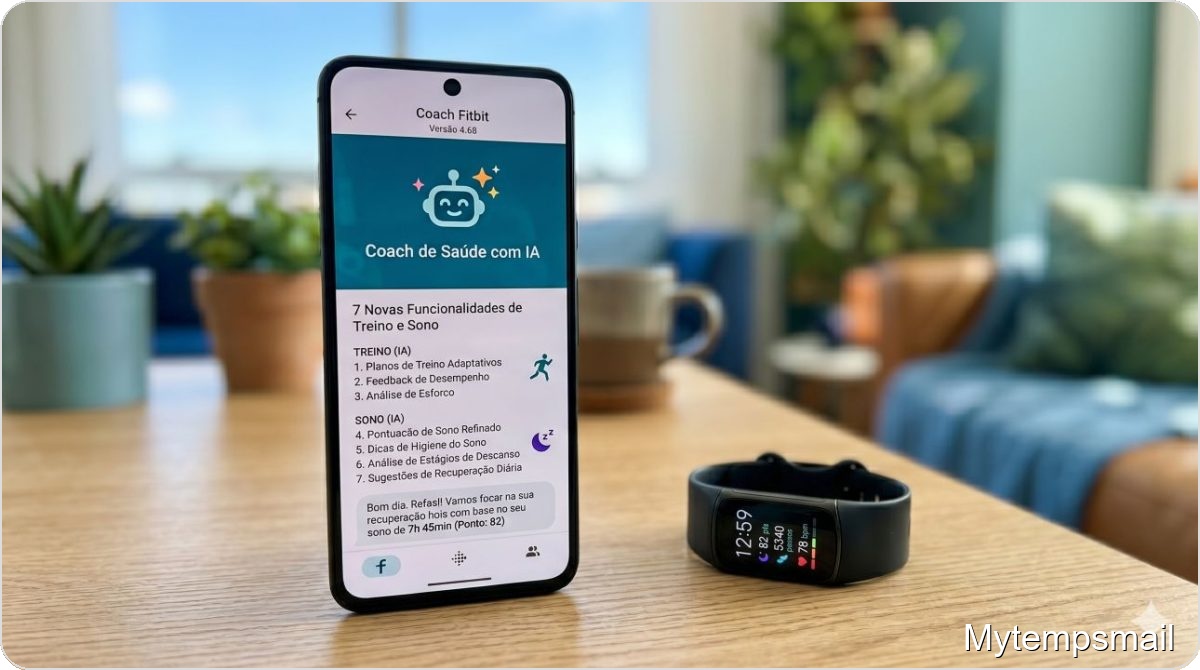

Seven features reshape the workout experience
The Fitbit health coach powered by Google’s Gemini model picked up seven new capabilities in app version 4.68 for Android and iOS, released the week of April 23, 2026. The update deepens the assistant’s role in users’ daily fitness and sleep routines as Google pushes Fitbit from activity-band maker toward a personalized health coaching platform.
Among the most notable additions are personalized weekly fitness goals and workout recommendations tailored to each user profile. The app now provides step-by-step guidance during coach-prescribed exercises, including real-time instructions. A revamped conversational check-in supports smoother text interactions with the assistant.
On the Today screen, users receive personalized motivational messages at three distinct times: Morning Moments, Post-Workout Summaries, and End-of-Day and End-of-Week updates. These are functional updates: each message is generated from activity data collected by the device.
Sleep: more transparency and claimed accuracy gains
Fitbit redesigned its sleep score to make the calculation method clearer. Google has stated a 15% improvement in the accuracy of sleep stage detection, a figure announced at The Check Up event in March 2026. That claim comes from Google as the primary source and, as of now, lacks independent clinical validation in published studies.
Android users also gain the ability to manually edit sleep records. iOS support is planned but the company has not provided a confirmed date.
A year of accelerated rollout
The Gemini-powered Fitbit health coach debuted as a preview at the end of 2025, available only to Fitbit Premium subscribers in the United States. Expansion moved quickly: in February 2026 the service reached iPhone users and several English-speaking markets, including the UK, Canada, Australia, New Zealand, and Singapore. By late March it became available to free users and added nutrition tracking tools and menstrual health features.
In early April, Google extended the service to 37 more countries and 32 languages, including Portugal. That same update integrated VO2Max, previously called Cardio Fitness Score, into the coach experience, tying cardiovascular performance into the assistant’s recommendations. In under six months the platform moved from a limited preview to one of the broadest AI health experiences in the wearable space.
What’s still missing and what’s next
Despite the breadth of new features, notable gaps remain. Google removed social features from the app in March 2023, including Challenges, Adventures, and Open Groups, saying the changes were needed to simplify the app amid integration with Google services. Three years later those social features have not returned and there is no public commitment to bring them back.
Conversationally adapting workout plans with the coach was announced as coming soon but is not yet available. That delay matters: this type of interactive adjustment is what separates an AI assistant from a simple generator of prebuilt plans.
On the hardware front, Bloomberg reported that Google is preparing a new screenless Fitbit tracker, reportedly called Fitbit Air, for release in 2026. The device reportedly drops a display in favor of higher-precision sensors, with all data shown exclusively in the app.
The wearable as a coaching peripheral
The real story behind this update is not any single feature. It is the strategic direction they reveal: Google is repositioning Fitbit as an AI health platform where hardware serves software rather than the reverse. The approach aligns with Google’s investment in Gemini but raises legitimate questions about health data privacy, reliance on paid subscriptions, and the lack of independent medical validation for generated recommendations.
Fitbit’s sleep tracking and personalized workout tools are promising. Until the accuracy improvements claimed by Google are confirmed by external studies, healthy skepticism remains warranted.
FAQ
What is Fitbit’s AI health coach?
It is a personal health assistant built into the Fitbit app and powered by Google’s Gemini. It provides personalized workout recommendations, sleep tracking, and motivational messages based on device-collected data. It is available to free users and Fitbit Premium subscribers in more than 37 countries.
How does Fitbit’s new sleep score work?
The sleep score was redesigned to be more transparent about its calculation criteria. Google has claimed a 15% improvement in sleep stage detection accuracy, announced at The Check Up in March 2026. That figure has not yet been independently validated in published clinical research.
When did Fitbit’s AI coach arrive in Portugal?
The coach reached Portugal in early April 2026, when Google expanded availability to 37 new countries and 32 languages following the initial US preview and subsequent rollouts to English-speaking markets.
