

Launch and lineup
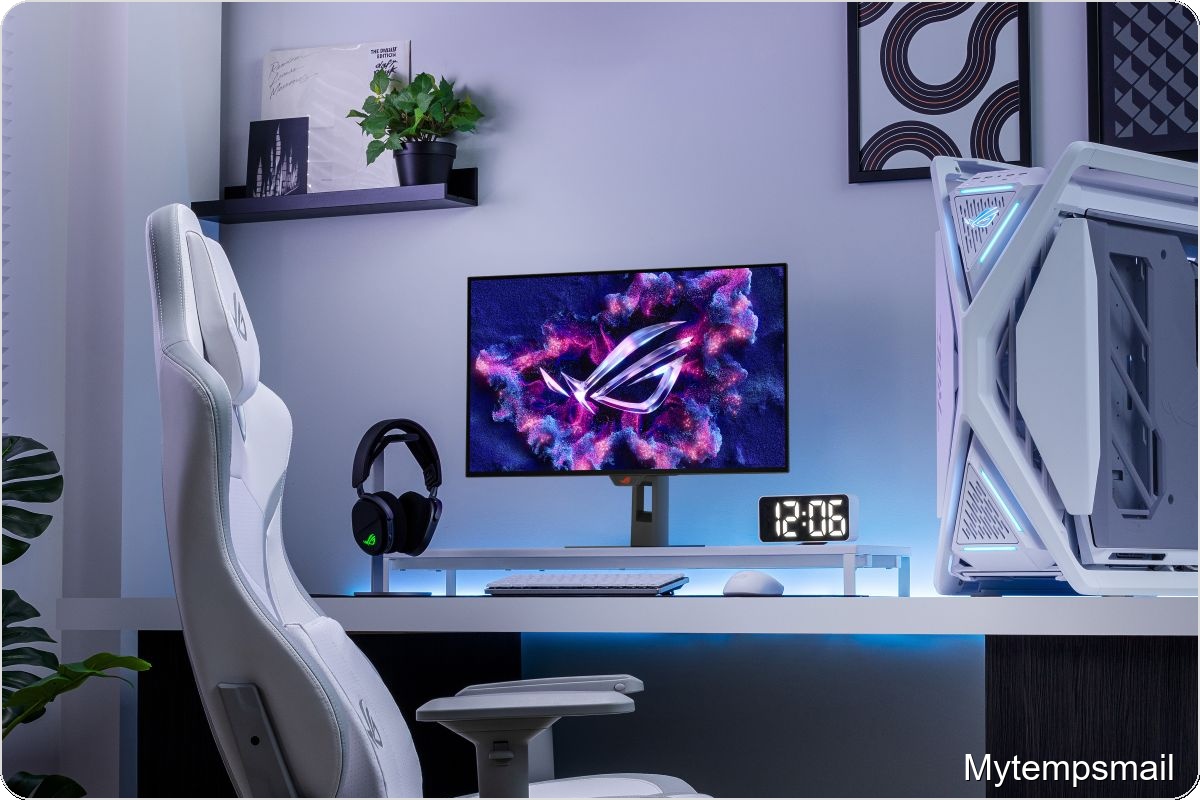
ROG’s new Strix OLED monitors reached the Portuguese market on March 13, 2026. The lineup comprises three 27-inch QHD models — the XG27AQDMG Gen2, the XG27ACDMS, and the XG27AQDMES — using two distinct OLED technologies and priced between €499 and €629. The pitch is straightforward: bring OLED performance to buyers who until now associated OLED with much higher price tags. As always, the technical details tell a more nuanced story than the press release.
Two panels, two directions
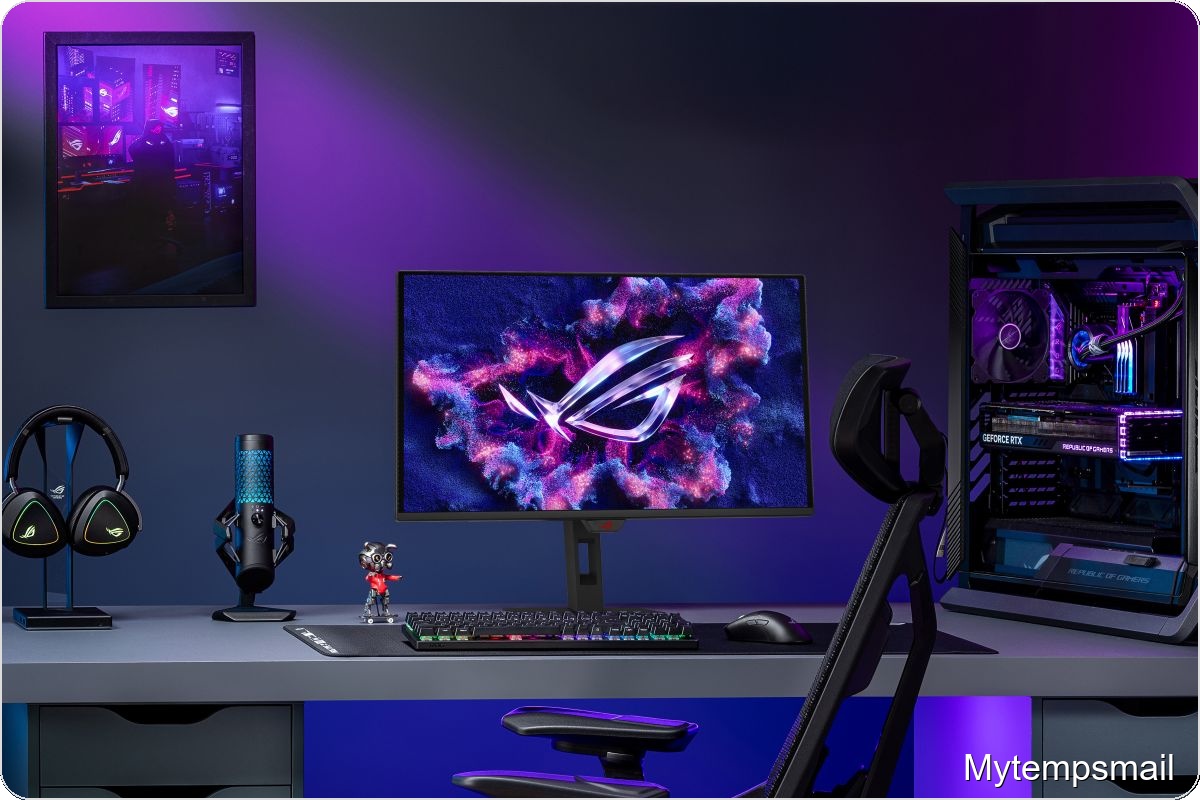
ROG split the line into two different OLED approaches that are not equivalent.
The ROG Strix OLED XG27AQDMG Gen2 uses a WOLED panel with a TrueBlack Glossy finish. WOLED adds a white subpixel to the standard RGB layout, which raises peak brightness while preserving deep blacks and extreme contrast. The glossy surface amplifies those effects but is also more reflective. It’s the right choice for a dark room or a tightly controlled lighting setup; in front of a bright window it becomes less ideal.
The XG27ACDMS and XG27AQDMES use QD-OLED panels with a semi-gloss finish. QD-OLED places quantum dots over blue OLED emitters and is known for strong color saturation, especially in green and red. The semi-gloss coating reduces reflections without sacrificing contrast, making it the more versatile finish for living rooms or variable ambient light. Both technologies reach 99% DCI-P3 and a 1,500,000:1 contrast ratio, figures conventional IPS panels cannot approach.
ROG Strix OLED XG27AQDMG Gen2: The brightest
The Gen2 sits at the center of the lineup. It delivers 1,300 nits peak HDR and carries VESA DisplayHDR 400 True Black certification, making it the strongest visual performer in the trio. At 240 Hz with 0.03 ms GTG, motion clarity for competitive titles remains intact. It supports both G-Sync and FreeSync Premium Pro, giving full variable refresh range compatibility across both ecosystems.
Connectivity is the most generous of the three: two HDMI 2.1 ports, one DisplayPort 1.4 (with DSC), and a USB 3.2 Gen 1 hub with two Type-A ports. If you have a next-gen console and a PC on the same desk, this model avoids connection compromises. It also includes Aura Sync for RGB lighting synchronization across ROG peripherals and components.
ROG Strix OLED XG27ACDMS: The fastest (with caveats)
The XG27ACDMS is the fastest model, offering a 280 Hz refresh rate, 40 Hz higher than the other two. For competitive players where every frame matters, that difference is meaningful. Its semi-gloss QD-OLED panel reaches 1,000 nits peak HDR and also meets VESA DisplayHDR 400 True Black.
The catch is connectivity, a significant drawback at a €629 price point. The XG27ACDMS has only one HDMI 2.1 port and no USB hub. It does include a USB-C port with 15W Power Delivery, which can power a laptop or charge a peripheral but is not sufficient for fast charging higher-power machines. If you want both a PC and a console connected, you’ll need an external HDMI switch, an extra cost not accounted for in the €629 price. This is the most expensive model but also the least equipped in ports. ROG did not explain this choice in its press release and it warrants clarification.
ROG Strix OLED XG27AQDMES: The entry point with an asterisk
At €499, the XG27AQDMES is ROG’s headline value: OLED is no longer prohibitively expensive. That argument has merit; two years ago a premium-brand OLED gaming monitor typically cost €700 to €800. This model pairs a semi-gloss QD-OLED panel with 240 Hz, 0.03 ms GTG, 99% DCI-P3 at 10-bit color — a respectable spec sheet.
The asterisk is peak brightness. With 400 nits peak HDR, this model only meets the minimum for VESA DisplayHDR 400 and ROG does not claim True Black certification for it, unlike the other two models. The gap to the Gen2 is substantial: 900 nits less peak brightness, a 225% difference that yields visibly different HDR performance in high-dynamic-range content. It is not a bad OLED monitor, but buyers expecting the fullest HDR experience may be disappointed. Adaptive Sync supports G-Sync and FreeSync Premium, a tier below the Premium Pro certification used on the other two models and offering a slightly reduced set of sync features.
Burn-in: the question everyone avoids
OLED still carries the burn-in stigma, and ROG recognizes that. Its response is OLED Care Pro, which bundles the Neo Proximity sensor. The sensor detects when the user steps away and dims the panel automatically, reducing exposure time for static elements. The detection distance is configurable through the DisplayWidget Center software without using the OSD menus.
That said, OLED Care Pro is a risk-management tool, not a definitive fix. Users who leave persistent HUD elements on-screen for hours or who alternate gaming with office work face a real risk. The press release mentions a three-year general warranty, but it does not specify whether accelerated pixel degradation is covered. Buyers should clarify this with the retailer or ASUS’s local representative in Portugal before purchasing.
AI, ELMB, and the eSports mode
All three models include Dynamic Shadow Boost, which dynamically brightens dark areas without overexposing highlights. That feature has practical value in dark-scene shooters where spotting a hidden enemy can be decisive. Dynamic Crosshair uses AI to adapt the reticle color to the scene background to maintain visibility in high-contrast situations.
ELMB (Extreme Low Motion Blur) appears across the range to reduce ghosting in fast motion. For players who move between home setups and tournament play, the monitors can simulate a 24.5-inch screen — the eSports standard — without additional hardware. Each unit ships factory-calibrated with an electronic color validation report and supports firmware updates over the air.
Where each model fits
All three models are available in Portugal with a three-year warranty. For retail specifics, ASUS directs consumers to local representatives.
A clear push, and lingering questions
ROG has laid out a focused argument for sub-€600 OLED monitors. The XG27AQDMG Gen2 at €529 is likely the most balanced of the three, offering the best connectivity, highest brightness, and a WOLED screen that justifies the price. The XG27ACDMS at €629 targets those who prioritize 280 Hz above other trade-offs and can tolerate the leaner port selection. The XG27AQDMES at €499 is a genuine entry to OLED gaming, but the 400-nit peak places a visible ceiling on HDR performance that buyers should understand.
The OLED gaming monitor market is getting crowded. LG, Samsung, and AOC offer competing options in the same price band. ROG brings brand strength and a robust software ecosystem. What remains unclear is how burn-in or accelerated pixel degradation is covered under warranty, a detail that may be decisive for many buyers making their first move into OLED.
