
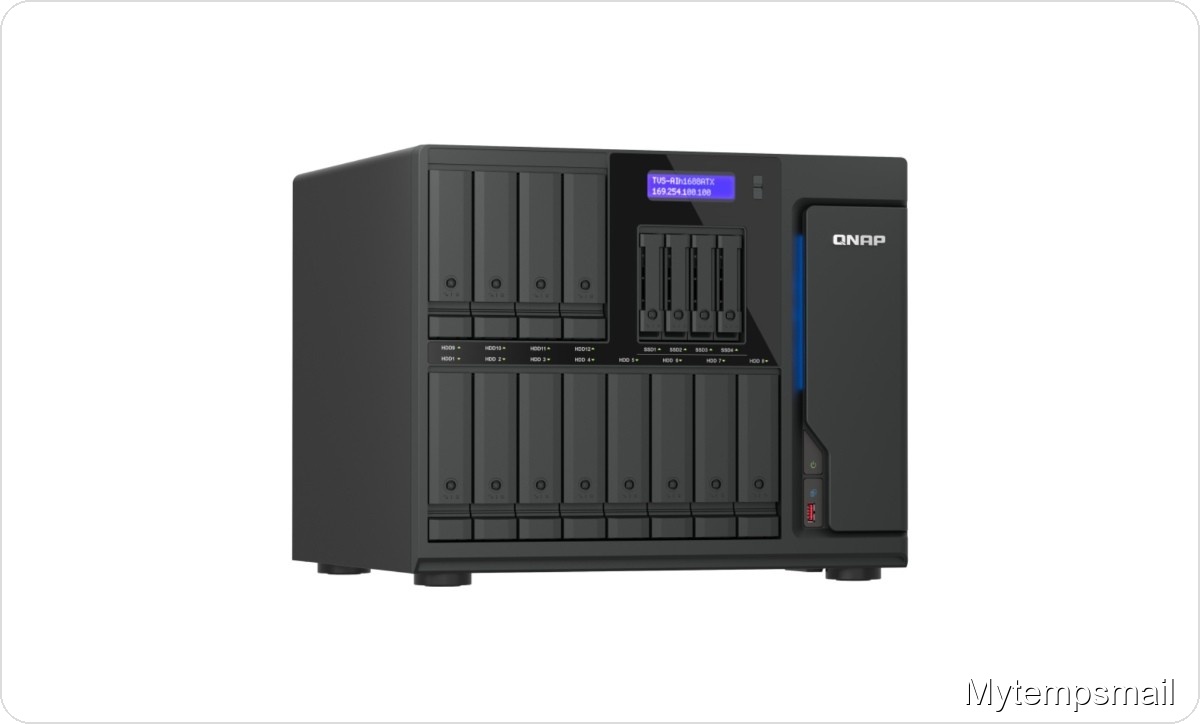

QNAP launches TVS-AIh1688ATX for on‑prem AI and virtualization
QNAP Systems announced the TVS-AIh1688ATX on November 24, a new enterprise-grade network-attached storage (NAS) platform built specifically for artificial intelligence workloads and virtualization. The system is powered by Intel Core Ultra processors and includes a neural processing unit capable of 36 TOPS (trillions of operations per second).
The product positions itself as a hybrid storage-and-compute platform aimed at organizations that need to process large volumes of data locally, with support for high availability architectures and Thunderbolt 5 connectivity.
QNAP TVS-AIh1688ATX: dedicated processing for the AI era
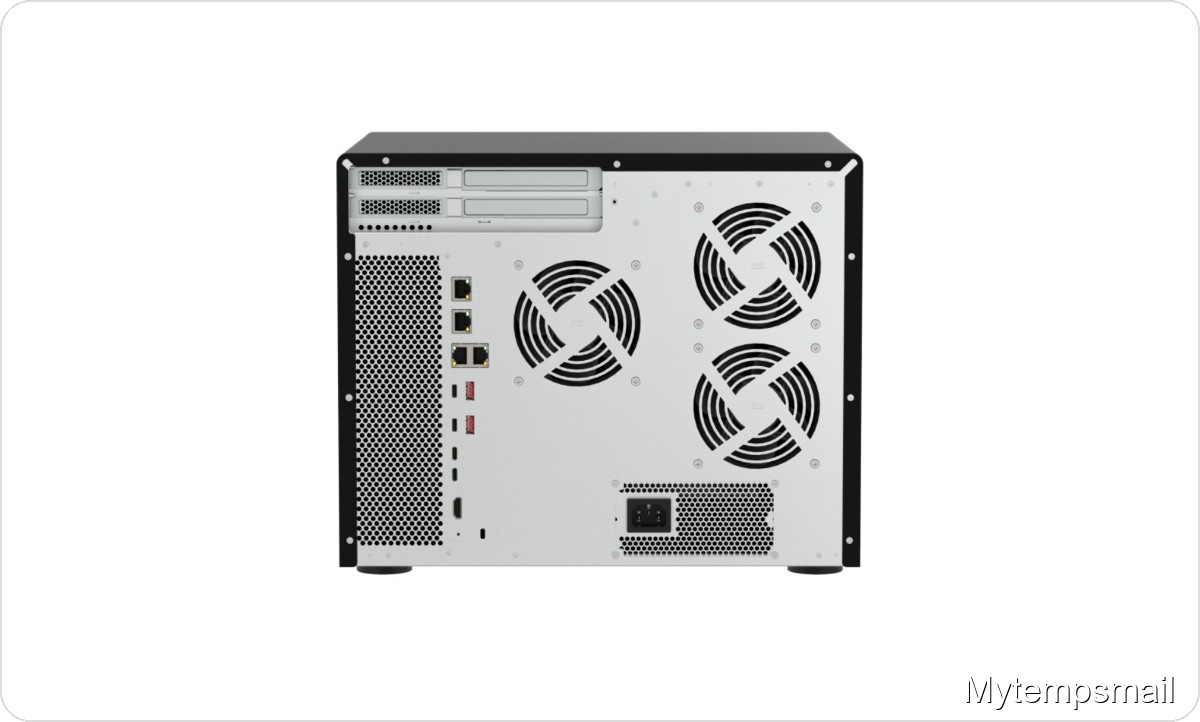
What sets the TVS-AIh1688ATX apart is its processing architecture. Unlike traditional NAS systems focused mainly on file management, this model integrates Intel Core Ultra 9 or Ultra 7 processors along with an onboard NPU, an Intel Arc GPU, and built-in AES-NI support.
Andy Chuang, QNAP’s product manager, emphasizes the need for an “agile, scalable infrastructure” to address modern complexity. The 36 TOPS NPU targets inference tasks, image analysis, and local facial recognition, freeing the main CPU to handle virtualization and other workloads.
Hybrid storage and scalability
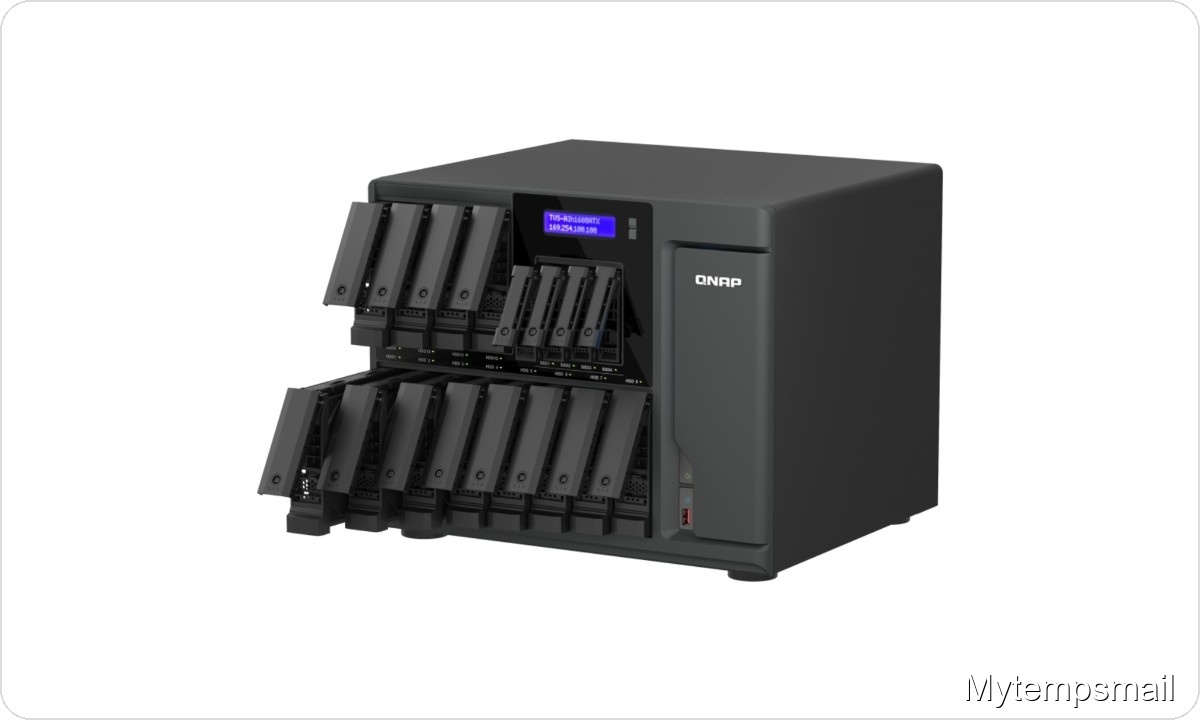
The chassis design reflects a need for both capacity and speed. The TVS-AIh1688ATX supports a robust hybrid storage configuration:
- Massive capacity: 12 bays for SATA hard drives (HDDs).
- High performance: four U.2 NVMe PCIe Gen 4 slots, suitable for caching or fast storage pools.
- Memory: support for up to 192 GB of DDR5 ECC RAM, important for data integrity during AI training and virtual machine operation.
Next‑generation connectivity and reliability
QNAP is emphasizing bandwidth for creative and enterprise environments. The TVS-AIh1688ATX supports Thunderbolt 5 via an optional expansion card and offers USB4, enabling direct connection of up to four workstations for collaborative 4K/8K video editing.
On the networking side, the system includes native 10GbE and 2.5GbE ports, with expansion options to 25GbE or 100GbE over PCIe. Reliability is delivered through the QuTS hero operating system, which uses the ZFS file system.
QuTS hero provides data integrity, inline deduplication, and will add support for active-passive high availability clusters to reduce downtime in critical environments.
Conclusion
The TVS-AIh1688ATX represents a shift in storage design, turning the NAS from a passive repository into an active compute platform. With an integrated NPU and Thunderbolt 5 support, QNAP is targeting businesses that want to bring AI workloads and high-speed video editing in-house.
| Model | QNAP TVS-AIh1688ATX |
| Launch date | November 24 |
| Processors | Intel Core Ultra 9 or Ultra 7 |
| NPU | 36 TOPS |
| GPU | Intel Arc (integrated) |
| Drive bays | 12 x SATA HDD bays |
| NVMe slots | 4 x U.2 NVMe PCIe Gen 4 |
| Memory | Up to 192 GB DDR5 ECC |
| Connectivity | Thunderbolt 5 (via expansion), USB4, 10GbE, 2.5GbE; expandable to 25GbE or 100GbE via PCIe |
| OS | QuTS hero (ZFS) |
