

Huawei chasing a true 10x optical periscope
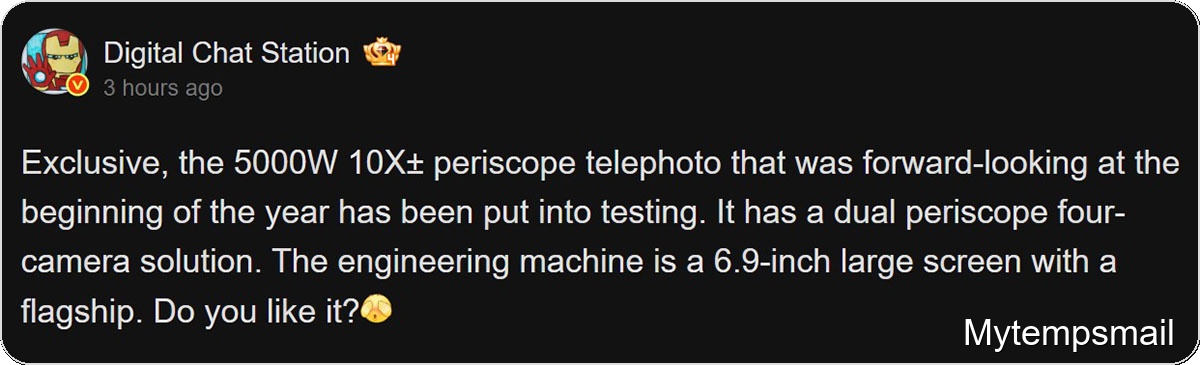
The mobile photography landscape may be about to shift again, and Huawei looks set to lead the change. Sources inside supply chains and development circles say the Mate line will continue to be the company’s optics showcase. Recent leaks from DigitalChatStation on Weibo indicate Huawei is testing a periscope image sensor capable of 10x optical zoom for the next flagship expected in the second half of 2026.
The device under test has not been formally named, but reporting points toward the Huawei Mate 90 Pro Max as the likely flagship. This is not a small incremental upgrade; integrating a native 10x periscope represents a material change in how light is captured and processed inside a slim smartphone body.
Dual periscope sensors to cover more focal lengths
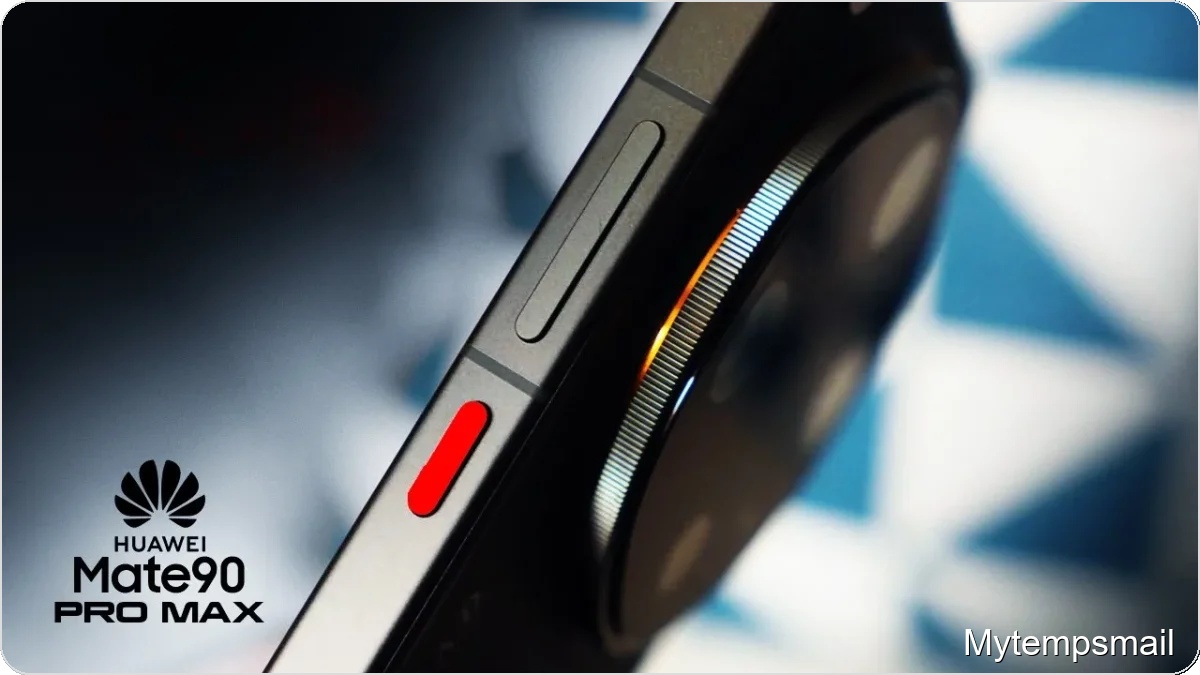
Huawei plans to keep a dual periscope sensor arrangement on the back. That approach has already proved effective at covering multiple focal distances while preserving sharpness. Adding a native 10x telephoto camera removes the brand’s heavier reliance on digital cropping and algorithmic interpolation for mid- and long-range shots.
In practical terms, architectural details, distant wildlife, or other far-off subjects should show finer texture and less grain than current approaches can deliver.
A 6.9-inch display tuned for photo and video
The Mate 90 Pro Max is also expected to ship with a large 6.9-inch display so users can better appreciate the images they capture. That size moves the phone toward compact tablet territory while retaining modern phone ergonomics.
Huawei may use a custom panel tuned for improved color accuracy and energy efficiency. The current Mate 80 Pro Max already sets a high bar with a dual-layer OLED hitting up to 8000 nits peak brightness. The new device is likely to keep second-generation Kunlun glass protection and a 120Hz refresh rate for smooth navigation and media playback.
The bar set by Mate 80 Pro Max
Beating last year’s Mate 80 Pro Max will be difficult. That phone’s camera package is notable for several reasons:
- 50MP telephoto camera macro with ultra-fast focus (OIS plus RYYB).
- 50MP super-telephoto camera for long-range shots (OIS plus RYYB).
- Complementary sensors including a high-resolution main camera, ultra-wide, and a multispectral sensor for color fidelity.
- Optical zoom capabilities of 4x and 6.2x, with a combined optical-equivalent quality reaching 12.4x through computational processing.
The reported 10x periscope won’t simply replace these elements. Huawei appears focused on smoothing transitions between focal lengths. A next-gen processor will be crucial to handle the massive data stream from 50MP (or larger) sensors and keep post-processing instantaneous.
Real-world benefits of 10x optical zoom
Why would a phone need 10x optical zoom? The answer is versatility. True 10x optics make it possible to capture shots that previously required a DSLR and a heavy tele lens. That includes concert shots from the crowd and portraits with natural bokeh and subject compression only long focal lengths produce.
Huawei’s HarmonyOS ecosystem will likely be a showcase for new AI-powered imaging features on the Mate 90 Pro Max. Expect improvements in night-time zoom photography where RYYB sensors—which swap green pixels for yellow to capture more light—should pair well with the new 10x optics.
The launch is expected late in the year, and expectations are high for a device that could become the new standard in mobile photography.
