


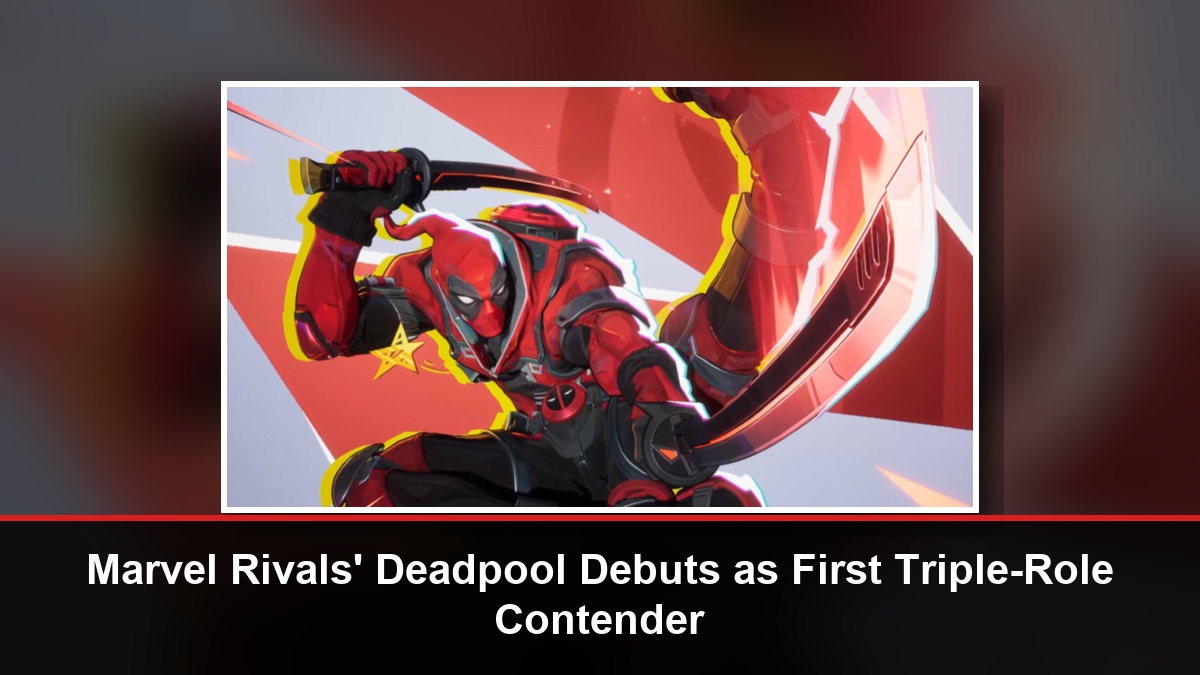
Pioneering Role Flexibility in Competitive Play
Marvel Rivals introduces Deadpool as its inaugural character capable of fulfilling Damage, Tank, and Support roles. This marks a significant evolution in the game’s hero design philosophy. Players can now deploy Deadpool across multiple team compositions without role restrictions.
Core Abilities Breakdown
Deadpool’s primary fire employs dual pistols for sustained mid-range damage. His secondary fire launches explosive rounds ideal for area denial. Both weapons feature unlimited ammunition but require strategic reload management during engagements.
Movement and Evasion Techniques
The “Quick Escapade” ability enables rapid repositioning through acrobatic maneuvers. This skill proves vital for disengaging from unfavorable fights or pursuing vulnerable targets. A 7-second cooldown balances its combat utility.
Defensive Countermeasures
“Bullet Ballet” creates a temporary damage-reduction field around Deadpool. When activated during enemy ultimates or focused fire, this 4-second shield significantly increases survivability. Proper timing separates effective Deadpool players from novice users.
Signature Ultimate: Chimichanga Chaos
Deadpool’s ultimate summons an explosive chimichanga airdrop impacting a 15-meter radius. The payload delivers massive area damage while creating temporary environmental cover from debris. Teams should coordinate this ability with crowd-control effects for maximum impact.
Strategic Team Synergies
• Spider-Man: Web-based crowd control synergizes with Deadpool’s explosive damage
• Punisher: Complementary mid-range pressure creates overlapping kill zones
• Storm: Weather effects amplify Deadpool’s mobility advantages
• Rocket Raccoon: Support turrets compensate for Deadpool’s reload intervals
Role-Specific Playstyles
As Damage: Focus on flanking routes and target prioritization. Use vertical mobility to access off-angle positions.
As Tank: Initiate engagements with damage reduction active. Create space for supports using explosive secondary fire.
As Support: Disrupt enemy formations with area control. Protect squads using defensive cooldowns during pushes.
Map-Specific Performance Metrics
Deadpool excels on hybrid maps with multiple elevation changes like Yggsgard Quadrant. His mobility proves less effective on linear payload routes such as Asgardian Expressway. Win rates fluctuate approximately 8% based on terrain complexity.
Pro Player Recommendations
Competitive teams suggest deploying Deadpool in compositions requiring flexible role adjustments. His kit shines during mid-fight adaptations when primary strategies falter. Top-ranked players maintain 45-50% ultimate uptime through efficient charge management.
Patch 1.07 Balance Considerations
Recent adjustments decreased Bullet Ballet’s duration by 0.75 seconds but reduced Quick Escapade’s cooldown by 1 second. These changes reinforce Deadpool’s high-risk/high-reward design while addressing community feedback about tank effectiveness.
Accessibility for New Players
Deadpool’s straightforward weapon mechanics make him approachable for beginners. However, mastering role transitions requires advanced game sense. Training mode drills focusing on rapid role-switching are recommended before competitive deployment.
Future Development Implications
NetEase confirms additional triple-role heroes will follow Deadpool’s framework. This design direction aims to increase strategic diversity in tournament play. Community response will influence subsequent character development pipelines.
Current Meta Impact Analysis
Since launch, Deadpool maintains a 17.3% pick rate across ranked matches according to Marvel Rivals’ API data. His presence correlates with 3.2% higher objective capture rates in Diamond+ tiers compared to single-role damage heroes.
This revolutionary hero design provides unprecedented compositional flexibility while maintaining clear counterplay options. Deadpool’s success will likely shape Marvel Rivals’ competitive landscape through Season 3 and beyond.
